
Bone Anchored Hearing Aids (BAHA): Hope Beyond Traditional Hearing Solutions
- Lovedeep Kholia

- Apr 23
- 2 min read

🔎 What is a Bone Anchored Hearing Aid (BAHA)?
Definition: A BAHA is a type of hearing device that uses bone conduction to transmit sound vibrations directly to the cochlea (inner ear), bypassing the outer and middle ear.

Components:
Titanium implant placed in the bone behind the ear.
External connector that attaches to the implant.
Sound processor that captures sound and converts it into vibrations.
Types:
Surgically implanted BAHA (most common).
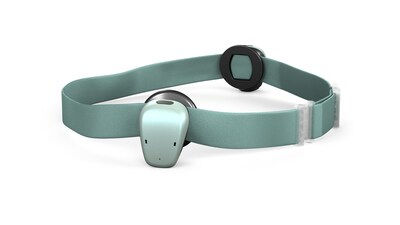
Non-surgical bone conduction aids (headband or adhesive options, often used for children under 5)
👂 How BAHA Helps Patients
Bypasses damaged ear structures: Ideal for patients with chronic ear infections, ear canal blockages, or malformations where traditional hearing aids are ineffective. hearingandme.com
Improves clarity and speech understanding: Sound is transmitted directly to the inner ear, reducing distortion.
Supports single-sided deafness: Allows patients to hear sounds from the deaf side by transmitting vibrations across the skull.
Comfort and hygiene: Since BAHA avoids the ear canal, it reduces irritation, drainage, and discomfort common with conventional hearing aids.
Better outcomes than reconstructive surgery: Studies show BAHA often provides superior hearing results with fewer complications compared to surgical ear reconstruction.
✅ Benefits of BAHA
Clearer, more natural sound quality in noisy environments.
Enhanced social participation and communication confidence.
Customizable options (removable processors for sleep, showering, or hair treatments).
Long-term reliability with modern designs that are smaller, more powerful, and discreet.
⚠️ Considerations & Risks
Surgical procedure required (except non-surgical options).
Healing time before the processor can be attached.
Possible complications: Skin irritation around the implant site, risk of infection, or device failure.
Candidacy depends on: Age, type of hearing loss, medical history, and personal preference.
🏥 BAHA at Unicare Speech & Hearing Clinic
At Unicare Speech & Hearing Clinic, Vikaspuri, West Delhi, our expert audiologists specialize in working with both children and adults who have:
Recurring conductive hearing loss
Microtia (underdeveloped outer ear)
Atresia (absence of ear canal)
Other complex conductive hearing loss conditions where BAHA can be truly life-changing

With the trust of more than 3,000 patients, Unicare has become a one-stop solution for advanced hearing care. Families can rely on our compassionate expertise and proven results.
📞 For consultation, contact our specialists at +91-971088173 or visit www.unicareclinics.com.
📌 Key Takeaway
Bone Anchored Hearing Aids (BAHA) are a life-changing solution for patients who cannot benefit from traditional hearing aids. By using bone conduction, BAHA provides clearer sound, improved speech recognition, and greater comfort, especially for those with conductive hearing loss, chronic ear conditions, or single-sided deafness.


Comments