
Speech Audiometry
“Beyond tones—testing real‑life communication.”
Service Description
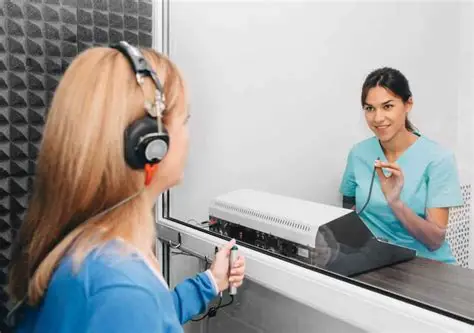
Speech Audiometry is a vital component of a complete hearing assessment, designed to evaluate how well a person can detect, recognize, and understand spoken words. While pure tone audiometry measures the softest sounds an individual can hear at different frequencies, speech audiometry goes a step further by assessing real‑life communication ability. This makes it one of the most practical and meaningful tests in audiology, as it directly reflects how hearing loss impacts everyday interactions. The test typically involves two key measures: the Speech Reception Threshold (SRT) and Speech Discrimination Score (SDS). The SRT determines the lowest intensity level at which a person can correctly repeat familiar words, providing a benchmark for hearing sensitivity in relation to speech. The SDS, also known as word recognition testing, evaluates how accurately a person can identify and repeat words presented at a comfortable loudness level. Together, these measures reveal not only the degree of hearing loss but also its effect on clarity and comprehension. Speech audiometry is conducted in a quiet environment using headphones or loudspeakers. The patient listens to carefully selected word lists or sentences, which may be presented in their native language to ensure accuracy. Responses are recorded and analyzed to create a clear profile of speech perception ability. For children, the test can be adapted with age‑appropriate words or picture‑pointing tasks, making it engaging and reliable even for young listeners. For adults and elderly patients, it provides valuable insight into communication difficulties, helping families understand why hearing loss may cause frustration or social withdrawal. Clinically, speech audiometry plays a crucial role in differentiating between conductive and sensorineural hearing loss, guiding treatment decisions such as medical management, hearing aid fitting, or cochlear implant candidacy. It also helps in monitoring progress after rehabilitation, ensuring that interventions truly improve communication outcomes. By focusing on speech—the most important sound in human interaction—this test bridges the gap between technical hearing thresholds and real‑world listening needs. In summary, speech audiometry is more than a diagnostic tool; it is a window into how patients experience communication in daily life. By combining technical precision with practical relevance, it empowers clinicians to design personalized rehabilitation strategies
Cancellation Policy
To cancel, please contact reception at least 24 hours prior to the appointment time.
Contact Details
Unicare Speech & Hearing Clinic, Shaheed Rajguru Marg, Block C, Vikaspuri, New Delhi, Delhi, India
+919716088173
unicareshc@gmail.com